_edited.png)
Benefits of Jiu Jitsu for Adults: A Sydney Guide
You finish work in Zetland with your shoulders tight, your attention scattered and enough energy left for the trip home, but not much else. The easy choice is the couch. The more useful choice may be an evening Brazilian Jiu-Jitsu class, where you spend an hour solving physical problems with another person, then leave feeling tired in a cleaner, calmer way.
That change is one of the main benefits of jiu jitsu for adults. You don't need to arrive fit, fearless or athletic. You need a beginner pathway that lets you learn safely, attend consistently and build capacity over time. At Locals Zetland and Locals Maroubra, the class structure and community are designed around that reality.
Why More Sydney Adults Are Walking Onto the Mats
The person leaving a Zetland office after a long day is rarely looking for another performance target. They may want to move without staring at a screen, meet people outside work and feel more capable in their own body. Jiu-Jitsu offers all three, but it asks for attention rather than perfection.
Australia already has a substantial martial-arts participation culture. Australian coverage cited 248,351 people aged 15 and over, equivalent to 1.2% of the adult population, taking part in martial arts, with 85% of participation organised rather than informal, as reported through Australian sport participation data (Australian Sports Commission participation results). SBS also reported in 2022 that Australia had about 40,000 Brazilian Jiu-Jitsu practitioners, roughly 90% of them Australian (SBS Australian Jiu-Jitsu coverage).
A routine that fits real Sydney lives
Sydney's inner suburbs suit a training habit built around convenience. Adults move between work, public transport, family commitments and irregular schedules, so a class needs to be predictable enough to become part of the week. Locals Zetland and Locals Maroubra have adult-focused pathways that give newcomers a clear place to begin instead of asking them to work out the culture on their own.
The appeal also reflects a shift in priorities. Many adults aren't chasing an aesthetic outcome alone. They want strength, mobility, practical self-defence, stress relief and longevity, and they want those outcomes through a social activity that gives them a reason to return.
A useful test: If a training plan only works when your week is perfect, it isn't a sustainable adult routine.
The Zetland beginner who chooses training over the couch may not notice dramatic change after one class. They may notice that they slept better, handled a difficult conversation more calmly or climbed the stairs with less effort. Those small signs matter because adult progress comes from repeated, manageable sessions rather than a single heroic workout.
What Jiu-Jitsu Is and Why It Suits Adults
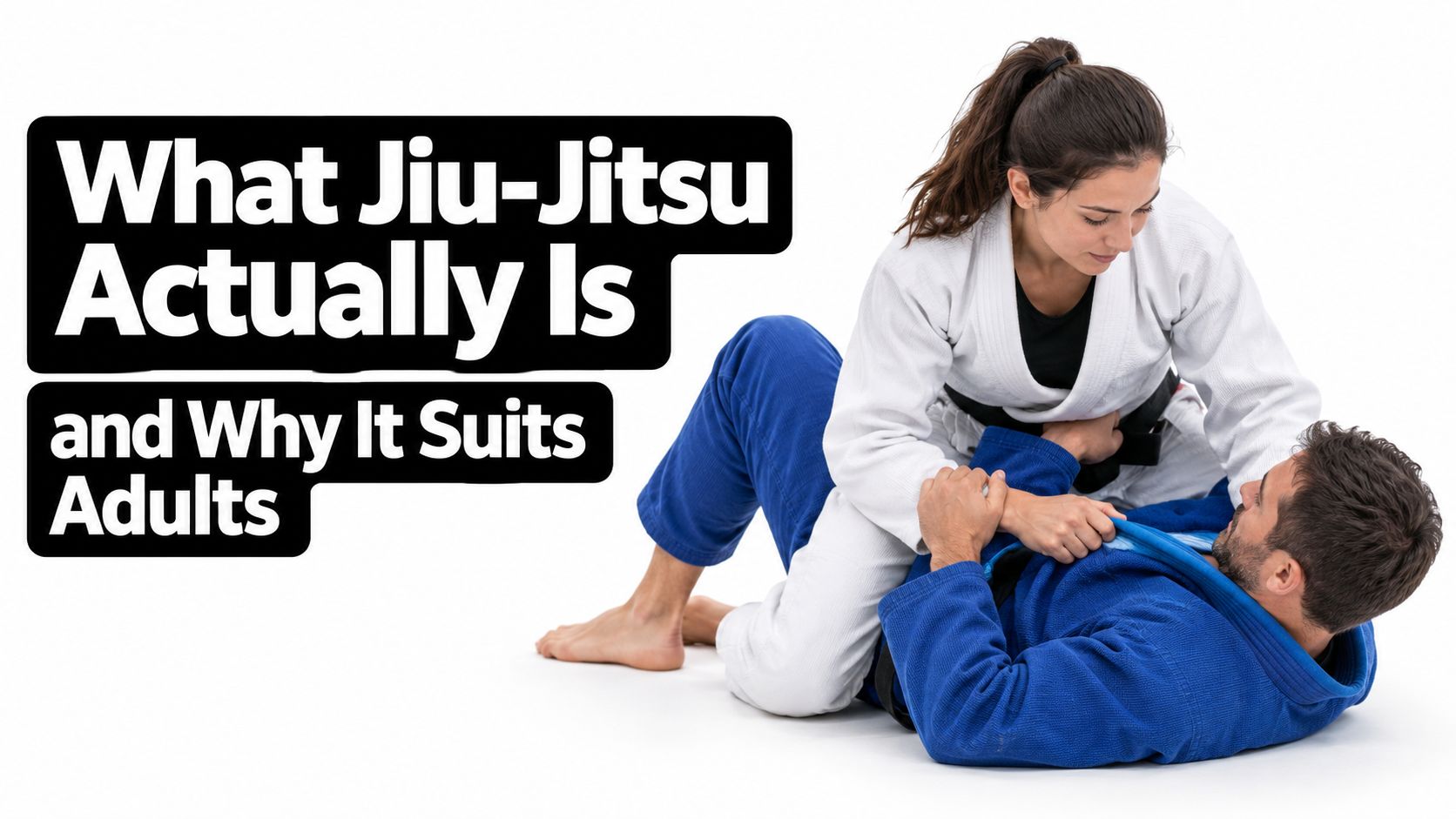
A nervous adult can arrive at Locals Zetland or Locals Maroubra with limited fitness, stiff hips and no experience grappling. The first lesson is not about overpowering a partner. Brazilian Jiu-Jitsu is a grappling practice built around position, angles, timing and controlled pressure. The practical question is how to protect your position, create space and respond to the movement available.
That makes the art accessible to adults with different bodies and backgrounds. A smaller person can use frames, hip movement and timing to manage a larger training partner, like solving a mechanical problem by changing the angle rather than pushing harder. You learn to escape an uncomfortable position, recover a safe guard, improve your angle and work towards control or a submission.
Training often begins from seated, kneeling or ground-based positions. The work remains demanding, but a coach can adjust the pace, starting position and partner choice. That gives beginners a controlled way to learn movement under pressure without making every session a test of speed or impact tolerance.
Technique creates a wider entry point
Your bodyweight and a partner's measured resistance provide much of the challenge. You can develop coordination and strength through grip fighting, bridging, framing, hip escapes and technical stand-ups, while the coach keeps the exercise suitable for your stage of learning.
The beginner pathway at Locals gives adults specific problems to solve rather than asking them to copy advanced athletes. A person may start with limited flexibility or conditioning and still build understanding through repeatable steps. Coloured belts reflect that developing knowledge, consistency and control, not youth alone.
For a practical introduction, this guide to what Jiu-Jitsu is explains the fundamentals in accessible terms. The physical, mental and social benefits grow from one shared skill: you learn to stay composed, move intelligently and make decisions while another person is applying pressure. Regular classes at Zetland and Maroubra give that skill time to develop within a welcoming Sydney community.
Physical Benefits You Can Expect as an Adult Beginner
Jiu-Jitsu develops physical qualities that adults use outside the gym, including functional strength, cardiovascular fitness, mobility and body control. The changes don't come from one technique or one intense session. They come from repeating movements that require you to grip, brace, rotate, bridge, stand and recover.
A systematic review of hard martial-arts training reported improvements across balance, cognitive function and psychological health. In older-adult studies, reported gains included strength of 9.3% to 34%, mobility of 9.5% to 13.6%, aerobic endurance of 13.4%, flexibility of 11.1% to 316.7% and balance of 20.5%. The review identified a practical training dose of 60 to 90 minutes at least twice weekly for more than 11 weeks (systematic review of health benefits of hard martial arts).
Strength that transfers
Grip fighting is obvious first. Your hands and forearms work while you hold fabric, control wrists or maintain frames. Bridging and hip movement recruit the glutes, hamstrings and trunk, while technical stand-ups teach you to move from the floor to your feet with balance and awareness.
This isn't bodybuilding, and it shouldn't replace every other form of strength work. It does, however, train your body to coordinate several areas at once. That can make everyday lifting, carrying and getting up from the ground feel more organised.
Conditioning without treadmill monotony
A class alternates between technical drilling, short efforts and controlled rounds. Your breathing rises as you scramble, recover guard or hold a stable position, then settles while the coach explains the next detail. That changing demand gives adults a more engaging route to conditioning than repeating the same machine movement.
Mobility develops through useful ranges rather than passive stretching alone. Hip escapes challenge rotation, guard work asks your hips to move freely, and breakfalls teach you to land with awareness. Adults who spend much of the day seated often feel these changes in how they turn, squat and rise.
Consistent training can also support fat loss when paired with sensible nutrition, because it combines movement, resistance and conditioning. The result remains dose-dependent. A sustainable schedule that you can maintain will serve you better than occasional sessions followed by long gaps. The Locals fitness guide offers further context on how adult training can support strength and conditioning.
Mental and Emotional Benefits Adults Notice First
The first mental change often arrives before a visible physical transformation. An adult comes in carrying unfinished emails, traffic frustration or a difficult conversation from work. For the duration of class, they have to notice a grip, protect their neck, listen to a coach and respond to a partner's movement. The mind has somewhere specific to go.
Australian participation data supports this wider motivation. The proportion of Australians who say they're active for mental-health reasons rose from 16% in 2017 to 31% today, according to the Australian Sports Commission (Australian activity and mental-health motivations). Jiu-Jitsu doesn't make stress disappear, but it gives adults a structured way to meet it and practise responding without panic.
Attention becomes physical
A gym session can allow your thoughts to wander. Grappling makes that harder. If you stop paying attention, your partner changes position and you have to solve the new problem. That creates a form of moving concentration, where breathing, posture and decision-making all happen together.
Adults commonly describe the immediate result in simple terms: their mind feels quieter after class. The attention doesn't come from sitting still. It comes from having a task that is demanding enough to interrupt rumination without requiring reckless intensity.
Confidence grows through small, verifiable wins. You learn to frame instead of flail, recognise an escape, tap before a joint is threatened and try the technique again after it fails. That process builds self-efficacy, meaning confidence based on experience rather than positive slogans.
Confidence is more durable when you can remember exactly what you did to earn it.
The effect can carry into work and family life. A beginner may pause before reacting to pressure, focus more easily on a complicated task or feel less intimidated by an unfamiliar situation. This perspective on building mental toughness through Jiu-Jitsu connects those training habits with everyday resilience.
A Look Inside Locals Zetland and Locals Maroubra Classes
Your first class should feel organised, not like an audition. At Locals Zetland or Locals Maroubra, an adult beginner can expect the coach to explain the movement, demonstrate the technique and establish the intensity before live practice begins.
A typical fundamentals class follows a clear sequence:
Movement preparation: The warm-up develops coordination, joint control and useful grappling movements rather than trying to exhaust you.
Partner drilling: You repeat the technique with a partner matched by size and experience where possible, receiving corrections as you learn.
Positional sparring: You start from an agreed position and work on a limited goal, keeping the intensity controlled so the exercise remains educational.
Your first month has a purpose
During the first week, expect fundamentals such as movement patterns, breakfalls, posture and safe tapping. The coach is helping you understand how to protect yourself and communicate with a partner before adding more complexity.
Weeks two to four can introduce escapes, guard recovery and top control. You shouldn't be expected to roll hard in the first fortnight. The aim is to build familiarity, not prove toughness. A gradual curriculum lets your body adapt while your decisions become more reliable.
Safety also depends on habits. Coaches teach beginners to tap early and release immediately, while supervised open mats give newer students a setting where pacing can be monitored. No-gi options can suit adults with sensitive joints or different preferences, and the head coach helps manage how much intensity a new member takes on.
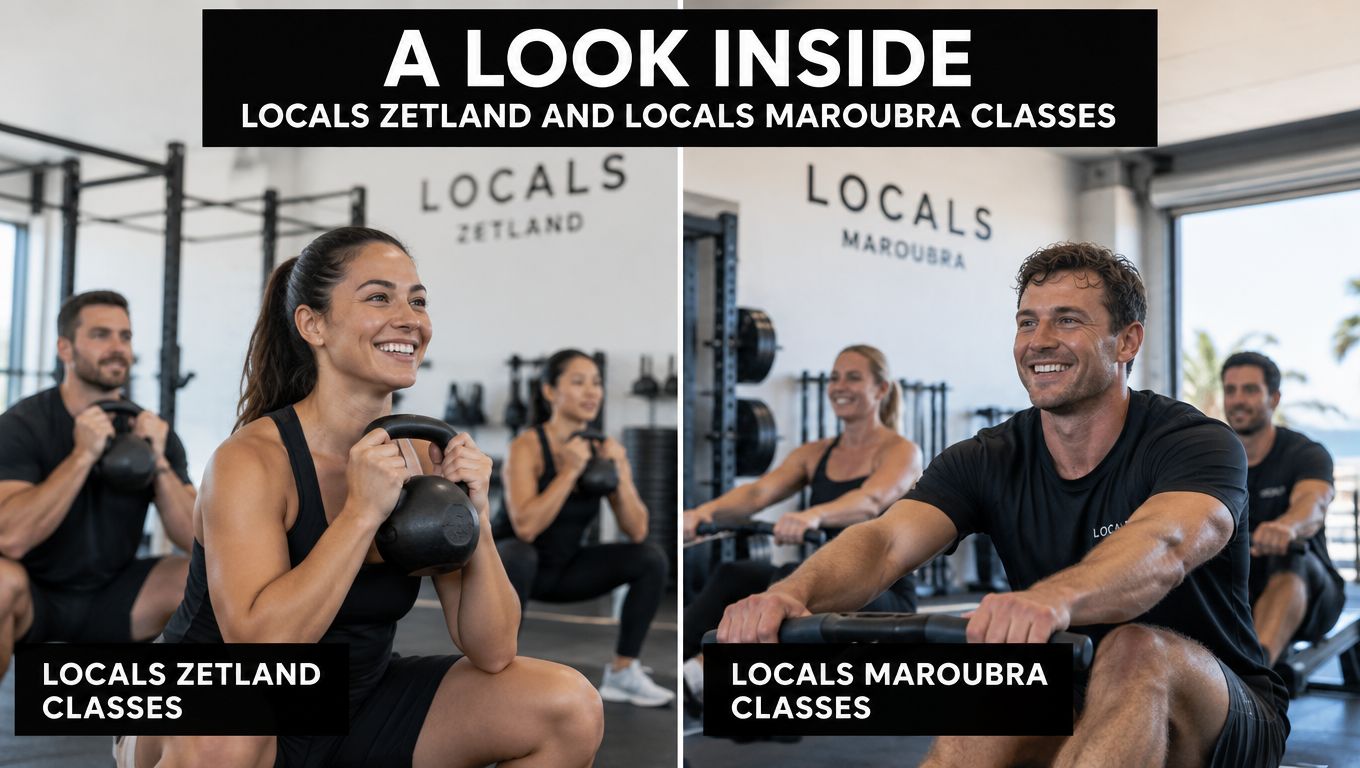
The two locations can suit different routines. Locals Zetland works for adults moving through Green Square, Waterloo, Rosebery or Surry Hills after work. Locals Maroubra may fit eastern-suburbs routines, beachside living or adults looking for a pre-work or weekend session. Check the current timetable before choosing, then use the free trial to experience the pace and coaching directly.
Real Worries Adults Have and How Smart Training Handles Them
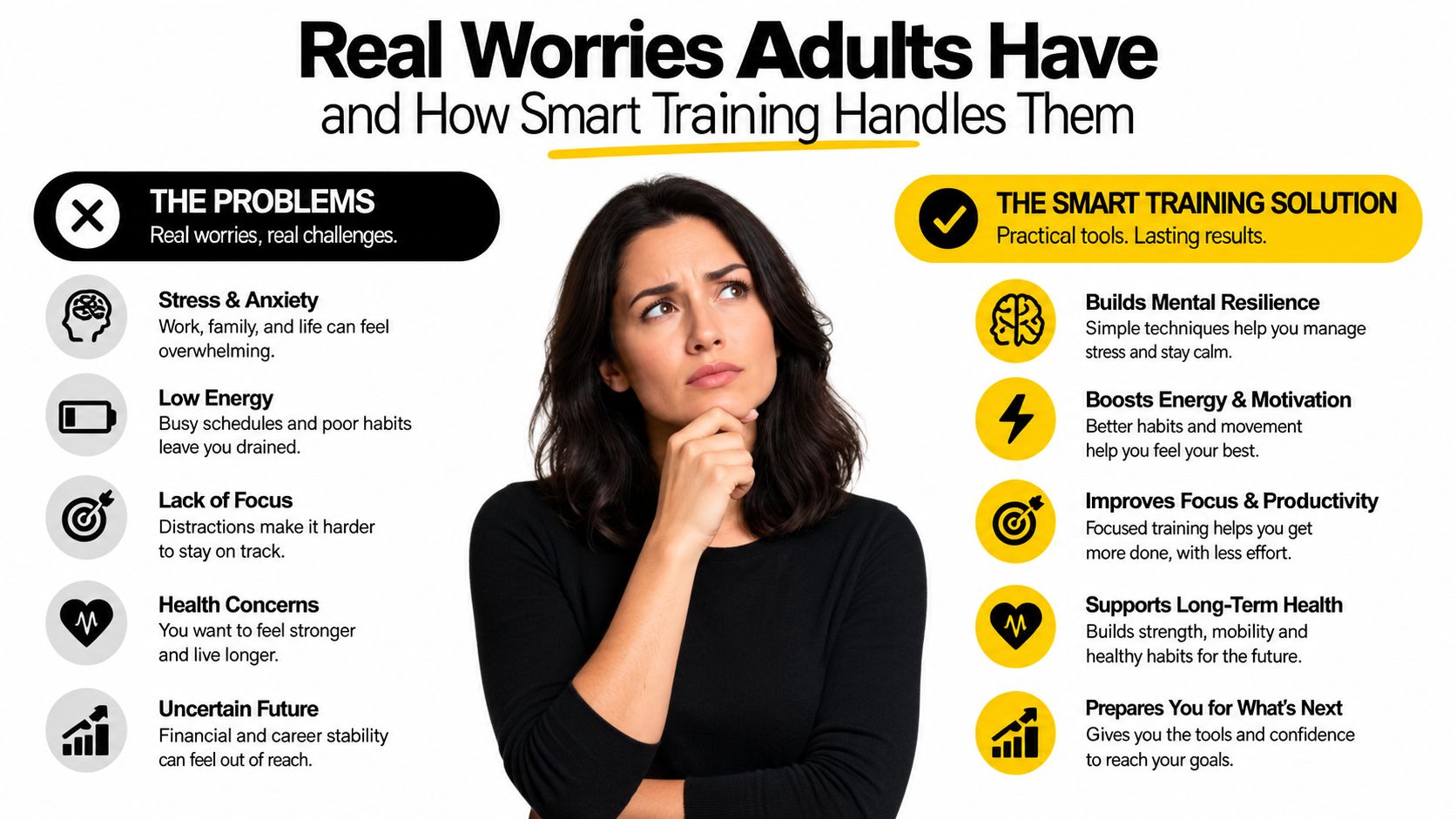
Walking into a new academy can bring practical concerns. You may wonder whether you are too old, too unfit or too small, or whether grappling will leave you injured. The useful question is how the academy manages those risks through class structure, beginner coaching and sensible partner choices.
Australian combat-sport data shows why that question matters. A Western Australia study of mixed martial arts and Muay Thai contests recorded 411 health problems, including 315 injuries and 96 illnesses, with an overall rate of 172.7 health problems per 100 athlete exposures and an average of one health problem every 0.6 athlete exposures (Western Australia combat-sport health study). These figures do not represent a Brazilian Jiu-Jitsu class injury rate, but they support coached progression, controlled live work and careful load management.
Four concerns, four practical questions
Age: Can older adults begin with fundamentals, choose suitable partners and improve through technique rather than speed?
Fitness: Can you work at a manageable pace, rest when needed and learn positions before harder rounds?
Size: Does the coach match partners by size and experience while teaching frames, angles and position?
Injury: Does the gym teach early tapping, supervise sparring, clean the mats and respect training limits?
A 2025 study reported 5.5 injuries per 1,000 training hours and 55.9 injuries per 1,000 matches among 881 participants. The comparison matters because recreational classes and competition involve different levels of exposure. At Locals Zetland and Locals Maroubra, a beginner pathway should keep early training controlled, while competitors need an honest conversation about the extra demands of matches.
Mat hygiene belongs in that conversation too. Adults comparing academies can find mat hygiene tips on WipesBlog.com and ask how each class handles cleaning, footwear and personal hygiene. Those answers reveal whether safety is built into the routine, rather than treated as an afterthought.
The Community and Social Side Most Adults Underestimate
Many Sydney adults arrive in the city for work and discover that professional contacts aren't the same as close friends. A gym can provide conversation, but a class built around shared effort creates a different kind of connection. You learn someone's name, trust them with your safety and notice when they aren't on the mat.
That belonging is a benefit in its own right. The Judo NSW martial-arts participation report found that the main motivation was physical health and fitness at 68%, followed by fun and enjoyment at 31%, psychological, mental health or therapy reasons at 21%, and social reasons at 16% (Judo NSW martial-arts participation report). Social motivation may not be the largest category, but it helps explain why adults keep attending when initial excitement fades.
Accountability without pressure
The most useful training partner isn't the person who tries to dominate every round. It's the teammate who helps you understand the exercise, adjusts pace and gives you a reason to return next week. At Locals Zetland and Locals Maroubra, that culture depends on a coach who learns names, partner matching that respects size and experience, and an expectation that beginners are coached rather than crushed.
Social events can extend that connection beyond sparring. Adults may arrive knowing nobody and gradually develop a familiar circle through shared classes, conversations and training milestones. That makes attendance feel less like another appointment and more like a commitment to people who recognise your progress.
An Australian qualitative study of modern martial arts and combat sports linked participation with lasting self-improvement and health-oriented lifestyles (Australian qualitative martial-arts study). The social environment helps those habits compound. You keep training because teammates expect to see you, and continued training is what allows conditioning, mobility, confidence and technical skill to develop.
How to Start Your Free Trial at Locals
Choose the location that matches your actual week, not an ideal version of it. Locals Zetland suits adults travelling through Green Square, Waterloo, Rosebery and Surry Hills, particularly when an after-work class removes the need for a second trip. Locals Maroubra offers a beachside setting that may work better for eastern-suburbs adults or Inner West residents seeking a calmer pre-work or weekend routine.
Book the free trial online or through the Locals app, then arrive early enough to settle in. You don't need a gi for the first session. Wear athletic shorts and a fitted rashie or club T-shirt, and bring a water bottle and flip-flops for the change room.

Make the first visit comfortable
Before you train, trim your nails, remove jewellery and shower. These details protect both you and your partner. During the class, listen for the tap signal, tap early when a position becomes unsafe and release promptly when your partner taps. If you're unsure about a movement or feel pain rather than normal effort, tell the coach.
A first class usually includes a warm-up, a couple of technique drills and supervised positional sparring. Beginners should be paired with experienced students who understand how to guide a new person through the exercise. The session should give you enough information to decide whether the pace, coaching and community fit your needs. For a useful checklist of questions to ask during any gym trial, review these free-trial insights from Gym Membership Tips.
After class, ask the coach what the first month pathway looks like and which sessions suit your schedule. You don't need to decide whether you'll compete or earn a black belt. You only need to identify a safe, repeatable starting point and attend it consistently.
Locals Jiu Jitsu Zetland offers structured adult Beginners, Advanced and No-Gi pathways, with coaching focused on movement, confidence, fitness and practical self-defence. Book a free trial at Locals Jiu Jitsu Zetland, arrive ten minutes early and let the coach show you how Jiu-Jitsu can become a sustainable part of your Sydney routine.
Comments