_edited.png)
Best Jiu Jitsu Books for Beginners: 10 Top Picks
The longest or most technical manual isn't automatically the best book for a new jiu-jitsu student. A beginner usually needs a clear match between the current training problem and the book's format. A fundamentals guide can explain survival and positional safety. A conceptual book can show why positions connect. A drilling manual can give structure between classes, while a guard or passing reference can solve a specific weakness. Mindset-focused books serve a different purpose again, helping busy adults train consistently without treating every session like a test.
That distinction matters at Locals Jiu Jitsu Zetland, where readers can test ideas through qualified coaching, controlled drilling and regular mat time. A book can help you remember a movement or ask a better question, but it can't correct your posture, timing or partner safety on its own. This list covers adult beginners, younger students and parents, developing competitors, gi and No-Gi students, and readers looking for a sustainable approach to training.
Australian beginners also have a substantial organised training environment to choose from. SBS, citing Australia-Brazil Chamber of Commerce data, reported about 40,000 Brazilian jiu-jitsu practitioners in Australia in 2022, with roughly 90% Australian, or approximately 36,000 local practitioners. The SBS report provides useful context, but the right book still depends on what you're learning this month.
1. Jiu-Jitsu University by Saulo Ribeiro with Kevin Howell
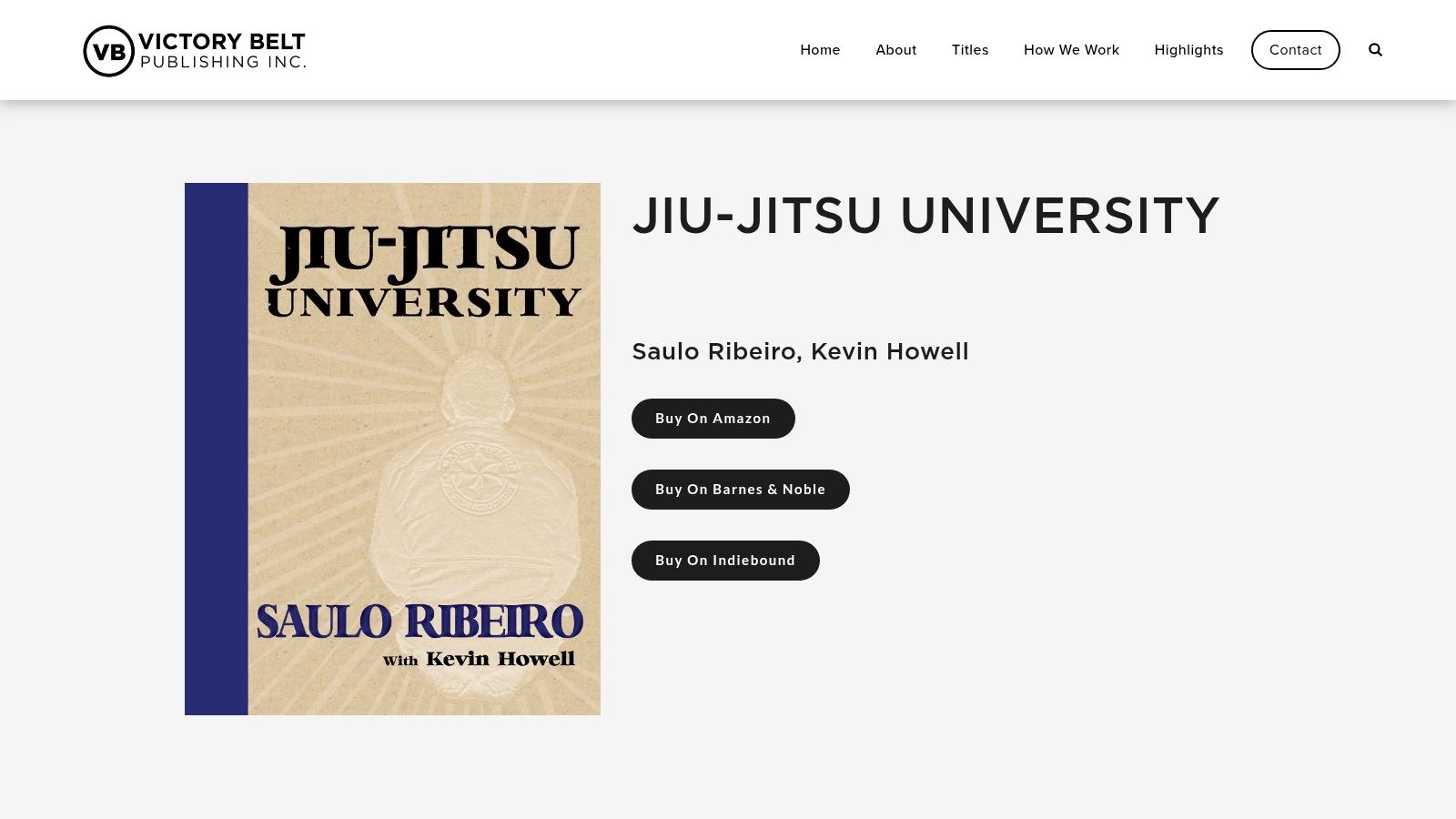
Best for: A completely new student who needs an ordered path through the fundamentals.
Jiu-Jitsu University earns its place near the top because it starts where many beginners struggle most, survival. Saulo Ribeiro and Kevin Howell organise the material by belt level, with the white-belt material concentrating on positional safety, escapes and defensive competence before chasing submissions. That order reflects what a new student needs in live training. If you can't stay safe in bad positions, an impressive attack catalogue won't help much.
The large photo sequences make the techniques easier to review after class, particularly when you remember the broad movement but forget where your frames, elbows or hips should be. The explanations also work for gi and No-Gi learners because the central themes involve mechanical advantage, position, frames, posture and hierarchy rather than a narrow competition system. Its fundamentals-first approach fits naturally with the Locals Jiu Jitsu fundamentals curriculum.
Where it fits on the mat
Use the book to prepare one question before class, then ask a Locals coach to confirm the version currently taught in the Beginners pathway. Students moving towards Advanced training can return to the same chapters and notice details they missed as white belts. Parents can also use the defensive emphasis to understand why a Kids class should prioritise control and safe movement rather than a long list of submissions.
Practical rule: Read the white-belt section, select one position, and practise only the movements your coach approves.
The limitation is its age and scope. It doesn't cover every modern No-Gi system, especially current leg-lock systems, and reading won't create timing. Treat it as a curriculum map and defensive reference, not a replacement for rounds at Zetland.
2. Mastering Jujitsu by Renzo Gracie and John Danaher
Best for: The adult beginner who wants to understand why positions work, not just copy a sequence.
Some beginners can reproduce a coach's hand placement but still don't know what they're trying to make their partner do. Mastering Jujitsu addresses that problem by combining history, strategy, core mechanics and practical technique. Its strongest use is conceptual. It gives readers a way to think about offence and defence as connected cycles, rather than isolated moves that only work when the partner stays still.
The positional ideas transfer across gi and No-Gi practice, which makes the book useful for students who attend both the Beginners and No-Gi pathways at Locals Jiu Jitsu Zetland. A reader can study the relationship between posture, base, pressure and movement, then watch for those principles during class. That approach is particularly valuable for adults who want a durable framework rather than a collection of memorised finishes.
The trade-off in the format
This isn't the most photo-dense option on the list. Students who need several close-up images for every grip change may prefer Jiu-Jitsu University or Nonstop Jiu-Jitsu. Readers who enjoy reasoning, however, may find the conceptual framing easier to revisit when a technique stops working during sparring.
Use one chapter to create a short observation task. During the next session, notice how a partner creates space, removes space or changes the direction of pressure. Bring confusing examples to a coach instead of assuming the book's explanation automatically matches the current class methodology.
The historical material also gives adult students context for Brazilian jiu-jitsu as an evolving practice. Australia has a documented jiu-jitsu history reaching back to 1906, while modern BJJ growth accelerated in the late 1980s and early 1990s through pioneers including John Will and Peter de Been, with Will becoming Australia's first black belt in 1998, as outlined in this Australian BJJ history. The context is interesting, but the training value comes from applying the principles carefully.
See the digital edition details for Mastering Jujitsu.
3. Nonstop Jiu-Jitsu by Brandon “Wolverine” Mullins and Stephan Kesting
Best for: A learner who knows the basic positions but freezes when the first attempt fails.
The most useful feature of Nonstop Jiu-Jitsu is its problem-solving orientation. Instead of presenting every technique as a guaranteed answer, it uses high-percentage sequences and decision points that help the reader think through what happens next. That reflects live training well. Your partner will block the first pass, recover a frame or change their angle, and you'll need a sensible next action.
The clear photographs and substantial step-by-step sequences make it practical for study between sessions. Beginners can pause at a familiar position, identify the first decision, and then trace the likely responses. That makes it more useful than a simple catalogue for students who repeatedly ask, “What do I do when they stop me?”
A good second book
This is a heavier reference, so it isn't the easiest manual to carry around or dip into casually. It also suits a student who has already attended enough classes to recognise the positions. A complete newcomer may find the amount of information distracting if they haven't yet developed a basic positional map.
Use it as a troubleshooting book. Mark a page after a coach demonstrates a related movement, then return to the section and compare the book's sequence with what you felt during drilling. A developing competitor may appreciate the competition-tested detail, but the No-Gi pathway at Zetland should remain the authority for grip choices, wrestling entries and submission variations used in current classes.
Use it after class: Choose one failed escape or pass rather than reading the book from cover to cover.
Compare responses: Ask which branch applies to your partner's posture, frames and hip position.
Keep the goal narrow: Work on one decision tree until you can recognise it during controlled sparring.
The book works best when it turns confusion into a question. It doesn't work well as a substitute for a coach who can see why your hips, elbows or weight distribution are out of place.
4. Drill to Win by André Galvão with Kevin Howell
Best for: A white belt who wants structured practice outside regular classes without inventing random workouts.
Many beginners want homework but don't know what safe, useful homework looks like. Drill to Win provides a progressive calendar of solo and partner drills, with emphasis on movement patterns, grip work and transitions. Its value isn't that a student can learn jiu-jitsu alone. Its value is that it can make repetitions more deliberate when a coach has already shown the relevant positions.
The plan is particularly suitable for students who like a clear routine. Someone following the Beginners pathway at Locals Jiu Jitsu Zetland can use a movement from the book as a reminder of hip mobility, bridging, technical stand-ups or transition awareness, then confirm its place with a coach. It can also support a developing competitor who needs to make warm-up and drilling time more purposeful.
Why safety matters
Partner drills need boundaries. Don't improvise resistance, speed or submissions because a book suggests a progression. Use a coach-approved partner, agree on the starting position, communicate clearly and stop when the movement becomes unclear. The guide can structure repetitions, but it can't assess fatigue, injury risk or whether both people understand the task.
The book's availability is another practical drawback. It may be out of print, and older copies can be difficult or costly to source. Australian readers should check the edition and ISBN before buying, particularly when using library services. Central Coast Council Libraries explains that its inter-library loan service can request books from public and university libraries across Australia for a $7 administration charge, with author, title, publisher, publication date and ISBN required in the request. The NSW library guidance shows why precise bibliographic details matter.
Follow the Locals guide to learning Brazilian jiu-jitsu at home alongside coach-approved practice. The best result is better movement quality, not unsupervised technique experimentation.
5. Brazilian Jiu-Jitsu Theory and Technique by Renzo Gracie, Royler Gracie, Kid Peligro and John Danaher
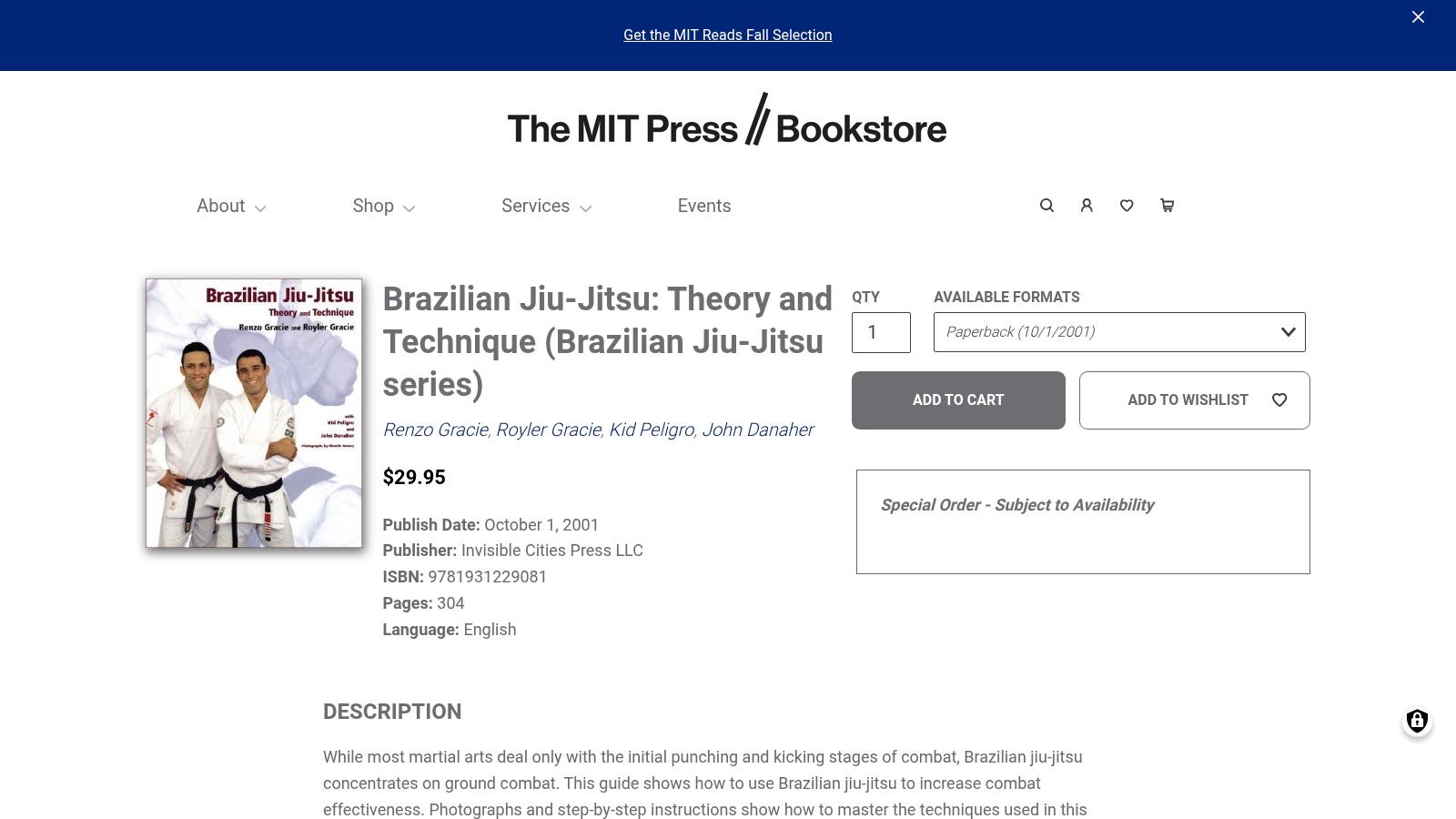
Best for: A white belt who wants a broad, traditional reference for positions, submissions and terminology.
This book works like a fundamentals compendium. It presents a wide range of foundational positions and attacks in a glossary-like structure, supported by clean photo layouts. That makes it useful when a student remembers hearing a term in class but can't place it in the larger map of jiu-jitsu.
The traditional gi emphasis is both a strength and a limitation. It gives beginners a coherent baseline for grips, posture and positional relationships, while students focused on the No-Gi pathway may need to confirm how the same ideas change when fabric grips disappear. The material remains useful as a reference, but it reflects an earlier technical era and won't cover every contemporary system.
Keep the reference in perspective
A classic manual can clarify vocabulary without dictating the exact method you should use. Locals coaches may teach a different grip, angle or finishing detail because of the current curriculum, your body type, safety considerations or the demands of live training. Mark those differences as questions rather than treating them as contradictions.
The book is also subject to variable print availability. That makes it a sensible library candidate before purchase, especially for readers who want to inspect the layout and edition first. Australian martial arts participation provides a broad organised setting for this kind of supplementary learning, with 248,351 people aged 15 and over estimated to have participated in martial arts and 85% of adult participation organised, according to Australian participation reporting. The figures describe the wider martial arts environment, not this book's effectiveness.
Use one entry to support a class question. Don't try to memorise the entire catalogue.
6. A Roadmap for Brazilian Jiu-Jitsu by Stephan Kesting

Best for: Someone in the first weeks of training who feels lost among unfamiliar positions and terminology.
A Roadmap for Brazilian Jiu-Jitsu solves a different problem from a technique manual. It gives the beginner a map of how major positions connect and what to learn first. That simple structure can reduce the urge to scramble randomly, hold the breath or chase a submission from a position where survival should come first.
The guide is concise and easy to read on a phone or tablet. It isn't a photo-heavy encyclopedia, so it won't replace a coach's demonstration or provide every grip and angle. Its strength is sequence and prioritisation. You can understand why the class moved from one position to another, then pay closer attention during the next lesson.
A useful first read
Read the roadmap before attending or returning to a fundamentals class, then write down the position that still feels unclear. At Zetland, ask a coach to connect the map to the movement being taught. The same approach can help parents understand the broad purpose of a Kids class, although children should learn techniques through age-appropriate instruction rather than independent reading.
A map won't teach you to drive, but it can stop you from getting lost.
This is one of the easiest options for a beginner because the PDF is available free through the Grapplearts roadmap page. That makes it a sensible first step for someone deciding whether buying a specialist book is worthwhile. Reading is a supplement. It doesn't provide resistance, timing, tactile feedback or a partner who reacts unpredictably.
Australia's long martial arts participation history also shows why structured beginner pathways matter. National reporting found that children's martial arts participation rose 24% between 2003 and 2012, supporting the need for clear, age-appropriate entry points for families, as documented by the Australian Bureau of Statistics.
7. The Black Belt Blueprint by Nicolas Gregoriades
Best for: A busy adult who wants to build sustainable habits instead of training intensely for a short period and disappearing.
Not every beginner's problem is technical. Some students struggle to manage work, family responsibilities, recovery and the emotional discomfort of being inexperienced. The Black Belt Blueprint approaches jiu-jitsu through principles, training habits, mindset, mobility and longevity. It offers fewer traditional step-by-step technique sequences, but that isn't a weakness if your immediate need is a realistic training approach.
The book suits adults who want to attend the Beginners pathway consistently and gradually move towards Advanced training. It can also help competitors understand that preparation includes recovery and decision-making, not only hard rounds. The useful question isn't whether the book will make you tougher overnight. It's whether it helps you arrive ready to learn and avoid turning every session into an ego contest.
Sustainable practice is a technical advantage
A training plan should leave room for communication and adjustment. If a movement causes pain, stop and ask a coach. If fatigue changes your control, reduce intensity. The evidence used in Locals' safety guidance is a useful reminder that training deserves attention: one systematic review reported 89% of injuries occurred during training, with 79% of training injuries occurring during sparring, while the knees accounted for 25% and shoulders 13% of affected areas, as summarised in Locals' BJJ injury discussion.
Those figures aren't a reason to avoid training. They reinforce why reading about habits and longevity should lead to safer behaviour on the mat. Bring the book's ideas to Locals coaches, especially if you're balancing training with existing physical demands.
8. The Guard by Joe Moreira and Ed Beneville
Best for: A beginner who repeatedly loses guard because posture, frames and grips break down first.
Guard is often introduced as a collection of attacks, but beginners usually need structure before submissions. The Guard concentrates on posture, grips, alignment and the mechanics that let a student stay connected to a partner. That makes it valuable for the lighter or less experienced student who feels flattened, stretched out or unable to recover position.
The photo sequences provide multiple angles and detailed coaching notes. Use them to study one recurring problem, such as allowing the partner's posture to rise or failing to keep a knee between the bodies. Then bring that problem into the Locals guide to guard and ask which defensive priority belongs first in the current curriculum.
Choose depth over novelty
This isn't the book to buy if you want a survey of every modern guard system. It goes deep into fundamental guard mechanics, and that depth is precisely why it remains useful. The trade-off is sourcing. New copies can be difficult to find, and used listings may vary in condition and price.
Students in the Beginners pathway should study one concept, not attempt every option shown on the page. A coach can tell you whether the grip or posture detail is appropriate for your partner's size, the class rules and the position being trained. No-Gi students should also expect some translation because fabric grips and sleeve control won't be available.
A reliable guard starts with retention and safety. Attack options become more useful after you can maintain connection and create space without exposing your back.
9. Passing the Guard by Ed Beneville and Tim Cartmell
Best for: A white belt who can reach the top position but can't stabilise or progress past the legs.
Guard passing is a separate training problem from guard retention. Passing the Guard gives the top player a framework based on posture, pressure, balance and angle creation. That makes it a good companion to The Guard, but you don't need to buy both at once. Choose the book that matches the position appearing most often in your classes.
The step-by-step passes include troubleshooting, which matters because a pass usually fails for a reason. Your weight may be too far forward, your base may be narrow, or you may be trying to move around a frame without first controlling it. The book helps you inspect those details rather than just adding another pass to your list.
Read it with live feedback
The photography and layout feel older than a modern digital course, and stock can fluctuate because many copies are found through used channels. Those limitations don't erase the value of the underlying fundamentals. Balance, base, pressure and angle still matter in gi and No-Gi training, although the grips and pacing may change.
Study the sequence after a Locals coach has shown a related pass. During controlled drilling, focus on maintaining posture and stabilising the position before trying to finish the movement. Advanced students can use the book to identify a passing theme, then ask how it connects with the current Advanced or No-Gi curriculum.
Australian sports participation has shifted across age groups over time. One study reported that adult participation fell 51% from 2001 to 2009, while children's participation rose from 6.2% in 2003 to 7.5% in 2009, as recorded in this Swinburne research publication. The broader lesson is that clear pathways matter for retention, whether the student is an adult beginner or a young learner.
10. The Essential Guard by Kid Peligro and Rodrigo Medeiros
Best for: A beginner who wants a defensive-to-offensive guard framework with practical retention priorities.
The Essential Guard starts with the skills that let a new student remain connected: frames, grips, guard recovery and retention. It then develops core attacks from foundational guard positions. That progression is sensible for students who feel that their guard disappears before they have a chance to attack.
The book can be especially useful for smaller and lighter practitioners because it focuses on structure and connection rather than assuming that strength will solve every problem. Still, don't interpret that as a promise that a book can remove the physical challenge of grappling. The partner's movement, your timing and the quality of your frames need live coaching.
A specialist reference with a sourcing problem
This is another older title that can be difficult to source new in Australia. Used stock, edition details and condition vary, so check the exact book before purchasing. Library borrowing can be a better first move if you want to inspect whether the photography and explanations suit your learning style.
Use one retention detail during a Locals fundamentals class, then ask a coach to check your alignment. In No-Gi, confirm how to replace sleeve and collar controls with frames, wrist control and inside position. In Kids classes, adults should not turn a specialist guard manual into a home lesson. Children need the academy's age-appropriate coaching and partner supervision.
The Australian retail market does show active interest in beginner-relevant BJJ books. Amazon Australia's bestseller page lists The Complete Guide for Jiu-Jitsu Principles and Concepts, rated 4.5 out of 5 stars from 146 ratings, and Brazilian Jiu-Jitsu: The Ultimate Guide to Dominating Brazilian Jiu-Jitsu and Mixed Martial Arts Combat, rated 4.5 out of 5 stars from 405 ratings, as shown on the Australian Combat Sports and Self-Defence bestseller page. Those listings indicate availability and buyer engagement, not proof that either title is the right choice for you.
Top 10 Beginner Jiu-Jitsu Books, Comparison
Title | Core Focus | 👥 Best For | ★ Rating & 🏆 Key Strengths | 💰 Price & Availability |
|---|---|---|---|---|
Jiu‑Jitsu University, Saulo Ribeiro with Kevin Howell | Belt‑by‑belt fundamentals; white‑belt survival/escapes ✨ | 👥 Complete beginners/white belts | ★★★★★ 🏆 Highly structured, photo sequences; defensive-first | 💰 Moderate; widely available in print |
Mastering Jujitsu, Renzo Gracie & John Danaher | Conceptual models, strategy & mechanics ✨ | 👥 Adults wanting frameworks & long‑term learning | ★★★★☆ 🏆 Strong conceptual framing; historical context | 💰 Moderate; common in bookstores |
Nonstop Jiu‑Jitsu, Brandon Mullins & Stephan Kesting | Photo‑rich fundamentals + if/then decision trees ✨ | 👥 Beginners → mid‑level students who study between classes | ★★★★☆ 🏆 Clear photos; practical troubleshooting | 💰 Higher; heavier book, sometimes pricier |
Drill to Win, André Galvão with Kevin Howell | 12‑month progressive solo & partner drilling plan ✨ | 👥 White belts seeking structured home practice | ★★★★☆ 🏆 Clear calendarised drills; builds timing & fitness | 💰 Variable; may be out of print/collectible |
Brazilian Jiu‑Jitsu: Theory and Technique, Gracie et al. | Broad technical compendium; gi focus ✨ | 👥 Students wanting a fundamentals reference | ★★★★ ☆ 🏆 Classic technique catalogue; authoritative authors | 💰 Moderate; availability varies by retailer |
A Roadmap for Brazilian Jiu‑Jitsu, Stephan Kesting | Positional flowcharts & learning order ✨ | 👥 New students wanting quick orientation | ★★★★ ☆ 🏆 Concise, mobile‑friendly; free PDF option | 💰 Often free or low cost; easy to access |
The Black Belt Blueprint, Nicolas Gregoriades | Principles, mindset, training habits & longevity ✨ | 👥 Busy adults aiming sustainable progress | ★★★★ ☆ 🏆 Holistic approach; injury‑aware training guidance | 💰 Moderate; digital/print available |
The Guard, Joe Moreira & Ed Beneville | Deep guard mechanics, posture & sequences ✨ | 👥 Beginners focused on guard fundamentals | ★★★★ ☆ 🏆 Excellent visuals for posture & alignment | 💰 Often found used; new copies rare/higher price |
Passing the Guard, Ed Beneville & Tim Cartmell | Systematic passing: posture, pressure & angles ✨ | 👥 White belts building top‑game basics | ★★★★ ☆ 🏆 Step‑by‑step passes; transferable to no‑gi | 💰 Variable; older editions common in used market |
The Essential Guard, Kid Peligro & Rodrigo Medeiros | Guard retention, frames & core attacks ✨ | 👥 Smaller/lighter beginners & defensive learners | ★★★★ ☆ 🏆 Practical retention drills; safety focus | 💰 Variable; availability and price can fluctuate |
Turn Reading Into Better Training
The best jiu-jitsu books for beginners don't replace class instruction. They improve what happens around class. A useful book helps you remember a position, identify a recurring error, organise your questions or practise a coach-approved movement with better attention. The wrong book gives you too many techniques, encourages unsupervised experimentation or makes old instructions feel more authoritative than the coaching in front of you.
Start with one foundation or roadmap title. Choose Jiu-Jitsu University if you need a defensive, belt-structured introduction. Choose A Roadmap for Brazilian Jiu-Jitsu if the main problem is confusion about how positions connect and what to learn first. Mastering Jujitsu suits an adult who learns through concepts, while Nonstop Jiu-Jitsu is stronger for the student who needs help troubleshooting failed attempts.
Add a positional reference only after that position repeatedly appears in class. The Guard and The Essential Guard make sense when guard retention, posture or recovery keeps limiting your rounds. Passing the Guard fits the student who reaches the top but can't control the legs, create an angle or stabilise after the pass. You don't need all three books to make progress. One well-used reference is more useful than a shelf of unopened manuals.
Choose Drill to Win when you have a coach-approved partner and a safe drilling environment. Don't use it as permission to teach yourself unfamiliar submissions or increase intensity without guidance. The same principle applies to every book on this list. A photo sequence can't feel whether your partner is in danger, whether your joint is under pressure or whether a technique has become a scramble.
For mindset and sustainable habits, The Black Belt Blueprint is the natural fit. It supports adults managing work, family and recovery, while Locals coaching remains the authority on technique selection and safe application. Developing competitors can combine a conceptual book with Nonstop Jiu-Jitsu or a drilling guide, then adapt the ideas to the current Advanced and No-Gi pathways at Zetland.
Bring your book to class, or note the exact page before you ask a question. Tell the coach what you tried, where the movement stopped and what your partner did next. That gives the coach useful information and prevents a printed explanation from becoming a rigid rule. Locals Jiu Jitsu Zetland and Locals Maroubra can provide the live context that books cannot, including partner feedback, controlled resistance and progression appropriate to your experience.
Reading also fits into a broader recovery routine. If you use mobility work or heat therapy for sports recovery, keep the same standard of care: use it to support training, not to ignore pain or override coaching advice. Your aim isn't to collect techniques. It's to become safer, more observant and more consistent on the mat.
Visit Locals Jiu Jitsu Zetland with one clear training question and choose a book that supports it. Use the academy's Beginners, Kids, Advanced and No-Gi pathways to test ideas through qualified coaching, controlled drilling and regular practice.
Locals Jiu Jitsu Zetland offers structured Kids, Beginners, Advanced and No-Gi training with experienced coaches and a safety-first approach, making it a practical place to put these books into context. Bring your questions from the page to class, try a session and visit Locals Jiu Jitsu Zetland to start training with a supportive Sydney community.
Comments