_edited.png)
Jiu Jitsu Tees Buyer Guide for Training
You've just finished a hard round in a warm Sydney gym. Your cotton tee is saturated, the hem has ridden up under your ribs, and every scramble has dragged wet fabric across your back. It looked fine in the car park, but it's now heavy, sticky and unpleasant for both you and your training partner.
That's the reality jiu jitsu tees need to handle. Brazilian jiu jitsu combines constant pulling, shoulder rotation, hip movement, friction and sweat, so a shirt that works for a barbecue can fail badly during live grappling. Australia also has an established local audience for the sport, with SBS coverage cited by Locals Zetland's overview of Brazilian jiu jitsu at around 40,000 practitioners, roughly 90% of whom are Australian rather than Brazilian.
Why Your Training Shirt Actually Matters
A beginner often grabs the nearest tee before class. That usually means soft cotton, a relaxed cut and a large print across the back. The first drilling round feels acceptable. After several rounds, the shirt absorbs sweat, clings to the skin and twists around the torso every time you frame, shrimp or fight for an underhook.
Wet cotton also creates more drag against the mat. During guard retention, that drag can pull the shirt up while your hips move underneath it. During a scramble, excess fabric becomes something a training partner can catch accidentally. Neither problem makes you move better, and both become more irritating as the session continues.
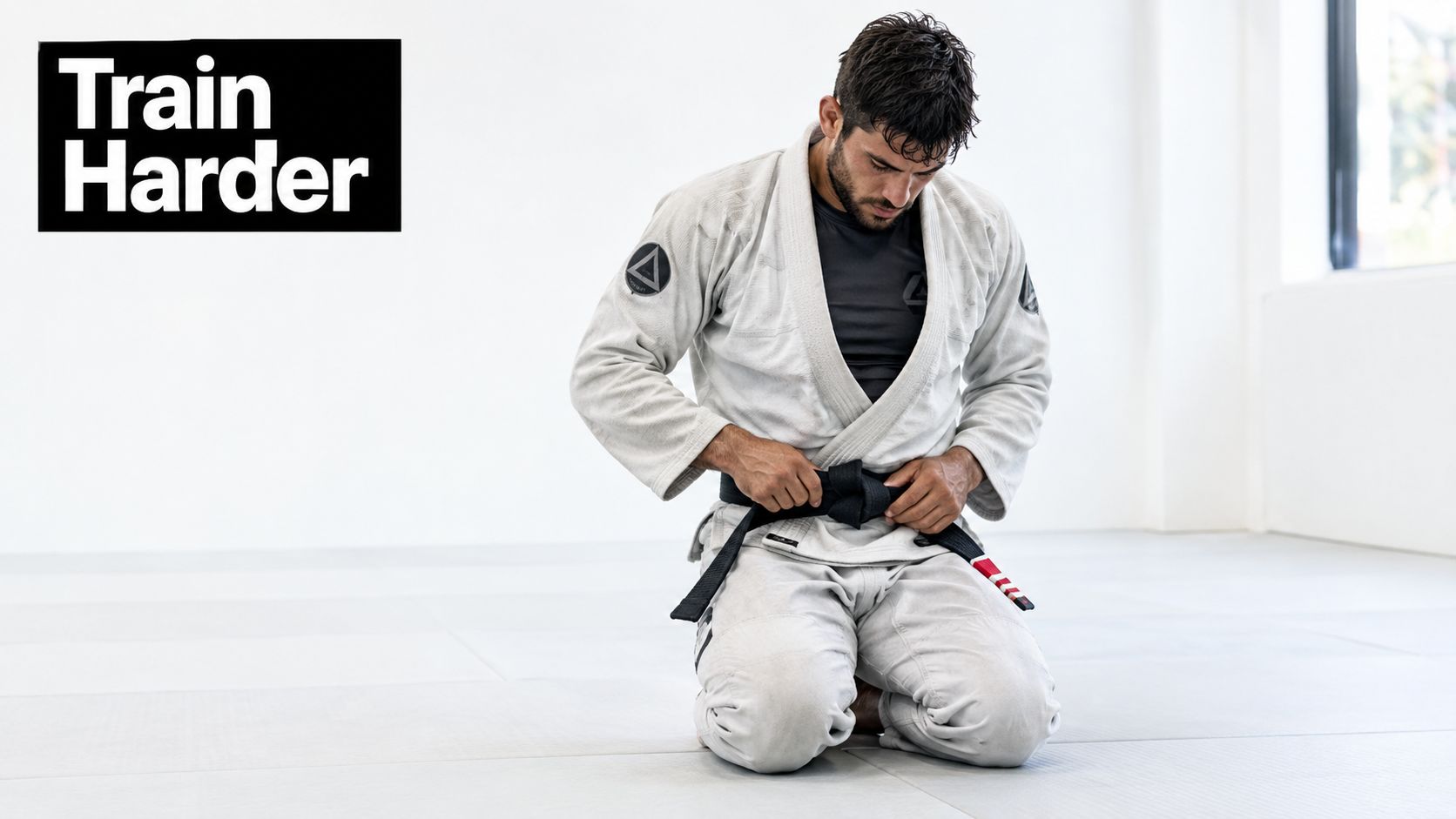
Grappling creates different demands
A jiu jitsu tee has to move with the shoulders while staying controlled around the waist. Your arms repeatedly reach overhead, post on the floor, pummel inside and circle around an opponent's frame. A shirt with a narrow shoulder pattern can restrict those movements, while a very loose lifestyle cut can bunch under your back or expose your midsection.
The issue is also hygiene. A damp garment stays in close contact with your skin and training surface, then gets worn through repeated rounds unless you change it. A clean, quick-drying spare is a practical part of training preparation, not an indulgence.
New and novice participants should train at an accredited school and follow its rules and protective-equipment requirements, according to Better Health Channel guidance on preventing martial arts injuries. Clothing can't replace safe coaching, but it can remove avoidable distractions.
Practical rule: If your shirt changes your movement, exposes your skin or stays wet for the rest of class, it isn't suitable for regular rolling.
For teams ordering consistent gear, managed custom apparel for teams can help organise design, sizing and repeat orders without treating the shirt as a one-off novelty. For a first no-gi session, the what to wear to a no-gi BJJ class guide is also a useful way to check the wider clothing setup.
Choosing The Right Fabric For Australian Mats
Fabric choice determines how a tee handles heat, perspiration and friction. In a humid Sydney training room, moisture management and airflow matter more than softness when the session becomes intense.
Cotton feels comfortable at the start because it's soft and familiar. Its weakness appears once it absorbs sweat. It tends to stay damp longer, which can increase rubbing around the shoulders, ribs and neckline. A heavy cotton tee may work for casual wear, but it's a poor match for repeated grappling rounds.
Polyester is usually the practical starting point for training. Moisture-wicking fibres move perspiration away from the skin, while lightweight construction and mesh zones help air circulate. Australian sportswear guidance explains that humidity can reduce wicking effectiveness, which makes breathability and ventilation important rather than optional. The same moisture-wicking and breathable sportswear guidance recommends checking for polyester-rich construction, explicit wicking claims, breathable zones and UPF protection when outdoor use matters.
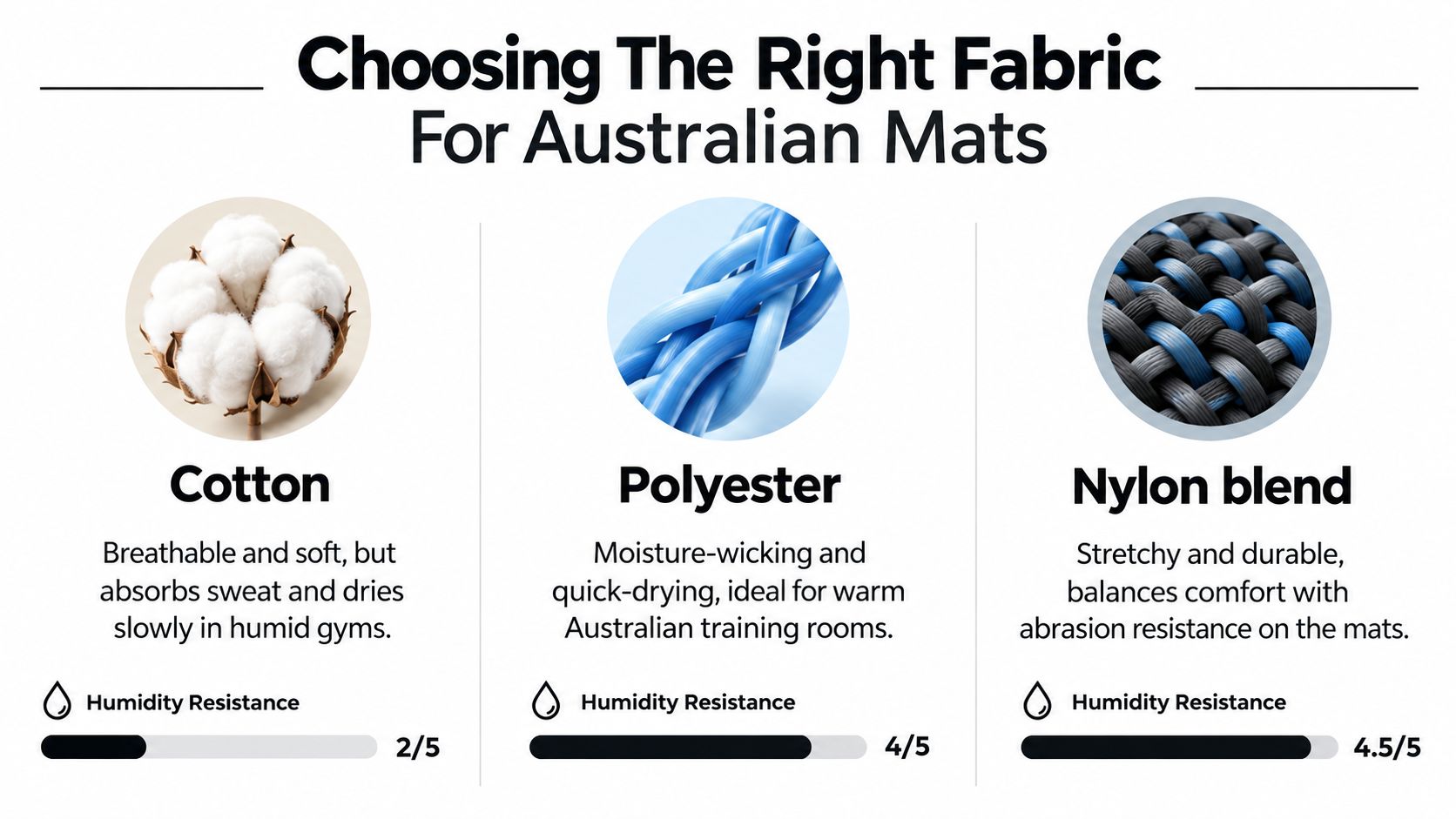
How the main options compare
Fabric choice | What works | Where it falls short |
|---|---|---|
Cotton | Soft hand feel and familiar casual comfort | Holds moisture and can dry slowly in a humid room |
Polyester | Light, quick-drying and suited to moisture management | Can feel less natural against the skin and may hold odour if neglected |
Nylon blend | Stretch, durability and a smooth feel | Performance depends heavily on the specific blend and construction |
Nylon deserves a closer look for grapplers who want a little more stretch and abrasion resistance. A sports-clothing review comparing nylon and polyester notes that nylon can absorb more moisture and wick better than polyester in some situations. That doesn't make every nylon blend superior. The percentage, knit, fit and ventilation design still determine how the tee behaves.
A useful rule is to judge the whole garment, not the fibre name on the label. A polyester tee with no airflow can feel hotter than a well-designed blend. A soft cotton-polyester shirt may be pleasant for warm-ups but still become saturated during hard sparring. If you're comparing custom apparel fabric from Dirt Cheap Product, look beyond the marketing term and ask how the fabric manages sweat, stretch and repeated washing.
The evidence also supports close contact. One source citing University of Wollongong research reports polyester moisture-wicking fabrics kept core temperature about 1.8 to 2.2°C lower than cotton during 60 minutes of moderate exercise in warm environments. The same discussion references CHOICE guidance that wicking works best when the garment sits close to the body, so a loose lifestyle tee may look relaxed while performing poorly.
For a related layer that sits closer during no-gi training, see the jiu jitsu rash guard guide. A tee still has its place, especially for warm-ups, casual wear and less restrictive sessions, but it shouldn't be selected on branding alone.
Finding The Perfect Grappling Fit
A shirt can fit correctly in front of a mirror and still fail the first time you reach for an underhook. Grappling fit is about movement without excess fabric, not just choosing your usual casual size.
Start with the store's size chart. Measure against the listed chest, shoulder and body dimensions rather than assuming every medium or large uses the same pattern. Training apparel can sit closer to the body, and stretch can change how the garment feels when you rotate, frame and bring your elbows inside.
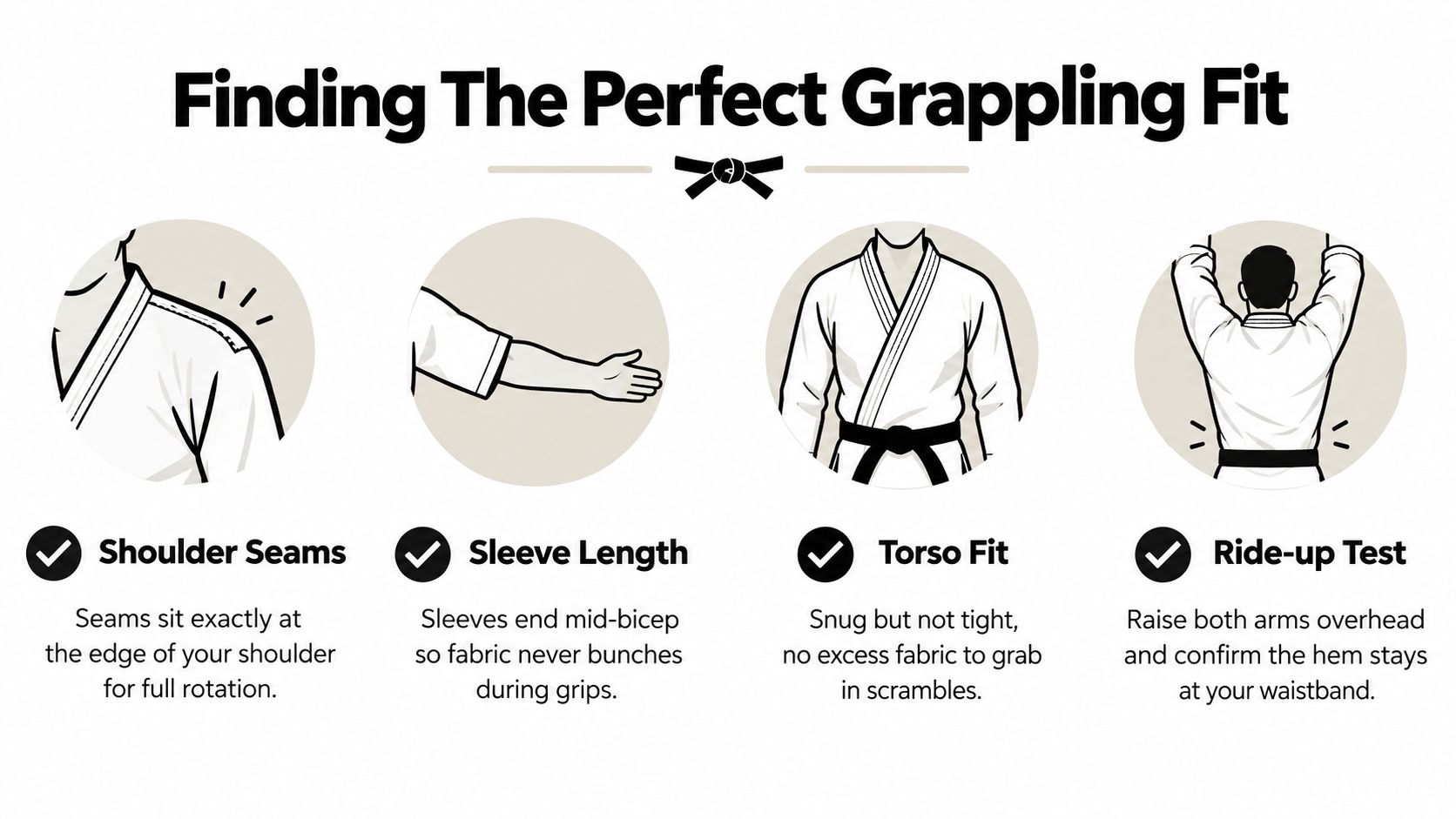
Use this movement test before removing the tags
Check the shoulders. Put the tee on and lift both arms forward, then overhead. The shoulder seams should stay near the edge of your shoulders without pulling sharply across the upper back.
Test the underhook position. Bend your elbows, bring one arm across your body and rotate your torso as though you're pummelling for inside position. If the sleeve bites into your upper arm or the back pulls tight, the cut is too restrictive.
Check sleeve control. A sleeve finishing around mid-bicep usually stays out of the way during grips and hand fighting. Sleeves that reach close to the elbow can bunch when your partner controls your arms.
Test the hem. Raise both arms, sit into a technical stand-up position and make a few shadow grappling movements. The hem should cover the waistband without creating a large pocket of loose fabric around your stomach.
Check the torso. The shirt should feel secure across the chest and ribs, but you should still breathe and rotate freely. A compression fit can reduce movement of the fabric, while a relaxed cut offers more casual comfort but creates more material for scrambles to catch.
Treat returns as part of the purchase
Australian sportswear retailers commonly require exchanges to be unused, in original condition and requested within a short window, with policies ranging from 7 to 30 days according to Australian sportswear returns guidance. Incorrect-size exchanges may not be available after wearing the shirt.
Keep the tags attached until you've completed the movement test. Don't roll in a new tee to “see how it goes” before checking the exchange conditions. A shirt that feels slightly loose in the lounge room may become unmanageable once sweat and grappling movement enter the picture.
Designs And Prints That Survive The Mats
A jiu jitsu tee has two jobs. It needs to perform during training, and it needs to retain its identity after repeated washing. A striking design is worthwhile only if the print doesn't crack, peel or distort as the fabric stretches.
Screen printing remains a strong option for simple, bold graphics. The ink sits visibly on the fabric and can provide a substantial finish, but the result depends on the ink, curing and garment quality. Thick prints can feel warmer on the back, and aggressive friction may eventually wear the surface.
Sublimation works differently. The design becomes part of the fibres, so there's no raised layer for a training partner or mat to catch. It suits synthetic fabrics particularly well and is useful for detailed, all-over artwork. The trade-off is that it generally requires a compatible base fabric and may not provide the same visual effect on every material.
Heat-pressed vinyl is useful for names, numbers and small custom details. It gives sharp edges and makes individual personalisation straightforward. The vulnerable points are the edges and corners, especially when the shirt is repeatedly stretched, dried incorrectly or rubbed against rough surfaces.
Match the print to the use
For a tee that will mostly be worn to and from class, any reputable print method can work if the garment is cared for properly. For regular mat use, choose a smooth print with no loose edges and avoid large raised areas across contact points such as the upper back and shoulders.
Wash instructions matter as much as the original application. Excessive heat, harsh treatment and careless drying can damage both the print and the performance finish of the fabric. Turn graphic tees inside out before washing and inspect the design when it's dry rather than assuming a premium-looking print will last automatically.
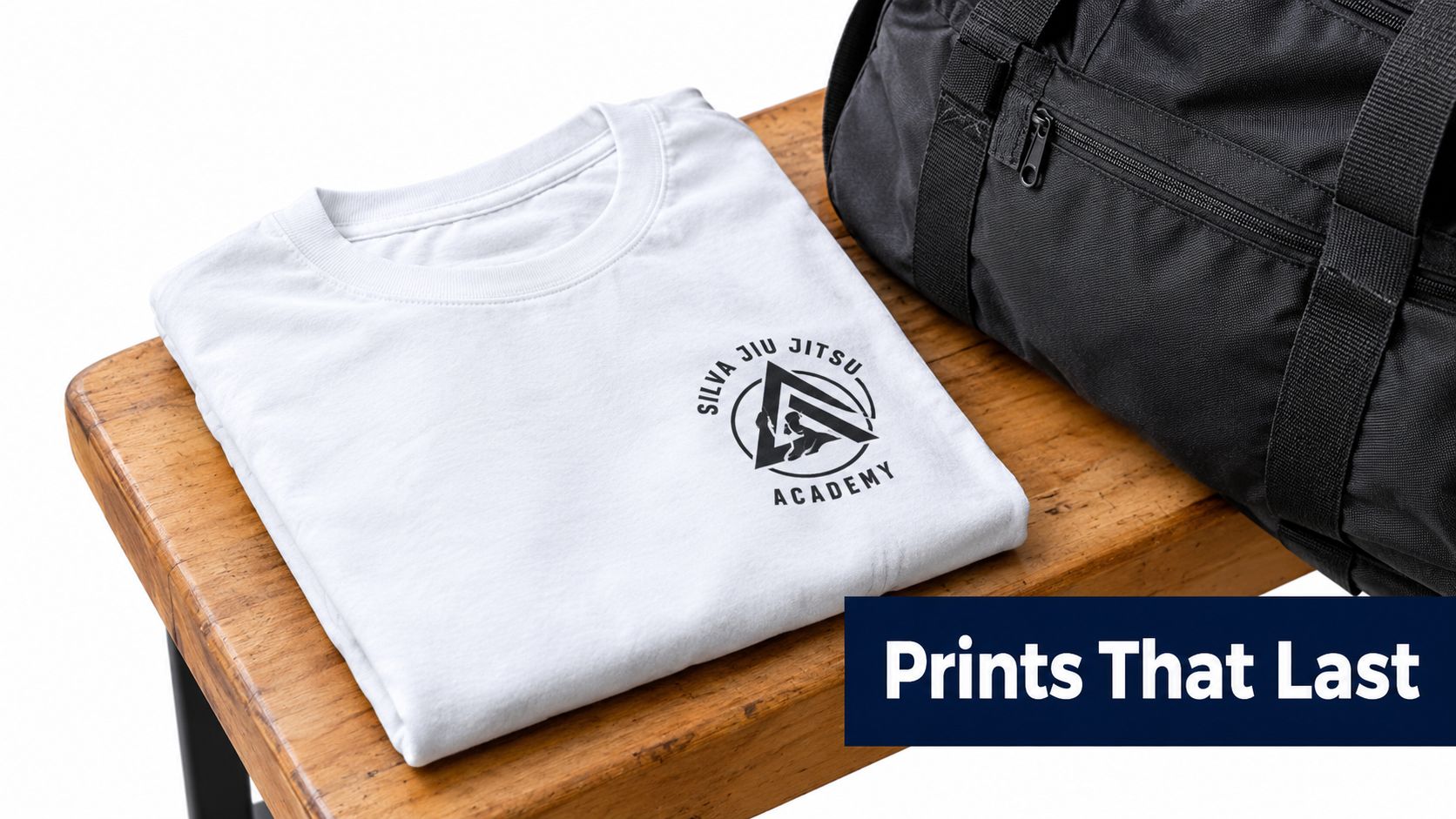
For academy owners, the best design is the one that reflects the team without compromising movement. Keep logos proportionate, place them away from high-friction zones where possible and ask for a sample before committing to a larger run.
Ordering Custom Gear For Your Local Academy
Custom gear works best when it solves a community need rather than chasing a novelty design. Students want something they can wear to class, around Sydney and on the weekend. Coaches need consistent sizing, reliable fabric and a print that still looks professional after regular use.
The wider market gives clubs more choice. The Australian sportswear market was valued at USD 2.4 billion in 2025 and is projected to reach USD 3.9 billion by 2034, implying a 5.58% CAGR from 2026 to 2034, according to the Australian sportswear market overview. That growth expands access to technical garments, but it also makes comparison more important. More choice doesn't guarantee a better tee.
Build the order around training reality
A local academy should decide the use case before choosing the artwork. A lightweight polyester tee may suit warm classes and outdoor events. A softer blend may be more comfortable for family members who wear the shirt casually. A close athletic cut may suit active grapplers, while a relaxed option can make sense for supporters.
Ask the supplier for:
A size sample: Have students check shoulder rotation, sleeve position and hem coverage before the bulk order.
Fabric details: Confirm the blend, stretch, weight and care requirements instead of relying on “performance” as a label.
Print testing: Inspect a sample after washing and stretching it by hand.
A clear exchange process: Make sure students know whether incorrect sizes can be exchanged and under what condition.
Community hubs such as Locals Zetland and Locals Maroubra show why apparel can be more than merchandise. A well-chosen shirt can help students feel part of the same room while still leaving space for different ages, backgrounds and training goals. It should support a respectful culture, not turn every class into a branding exercise.
Bulk ordering also rewards restraint. One dependable base tee, a clear design and inclusive sizing will serve the team better than several fashionable options that fit inconsistently. Use the logo to identify the community, then let the fabric and cut do the practical work.
Washing Routines And Final Buying Checklist
A good tee can still fail if it sits damp in a gym bag overnight. Rinse or wash it soon after training, follow the care label and avoid treating technical fabric like a heavy towel. Heat can affect prints and fabric finishes, while fabric softener may interfere with moisture management.
Turn graphic shirts inside out before washing, use a suitable cycle and separate heavily soiled training gear from everyday clothing. Don't leave sweaty garments compressed in a closed bag. For more guidance, air-dry graphic tees for longevity offers practical care advice for preserving printed designs.
Before buying, run through this checklist:
Fabric: Does the material manage moisture and allow airflow in warm conditions?
Construction: Are the seams smooth, the sleeves controlled and the neckline comfortable?
Fit: Can you pummel, frame, shrimp and stand up without the shirt restricting you?
Torso length: Does the hem stay near your waistband when both arms rise?
Print: Is the artwork smooth, secure and positioned away from the main friction zones?
Returns: Have you read the exchange window before removing the tags?
Care: Can you wash and dry the tee promptly after training?
Use case: Is it intended for hard rolling, warm-ups, casual wear or all three?
Pack the shirt with the rest of your essentials using this BJJ gym bag guide, and keep a clean spare available when the session involves several rounds. The best jiu jitsu tees aren't the loudest ones. They're the shirts you forget about because they stay comfortable while you concentrate on grappling.
Locals Jiu Jitsu Zetland offers structured Kids, Beginners, Advanced and No-Gi programs with experienced coaches and a safety-first approach for Sydney students. Visit Locals Jiu Jitsu Zetland to try a supportive training environment, learn how to prepare properly for the mats and find a programme that matches your goals.
Comments